

×

Fill Out The Form Below To Download Report

By ticking this box, you acknowledge and agree that People’s Courage International retains all intellectual property rights and ownership over the data provided herein. Any publication, presentation, or public dissemination of this data must include an explicit citation of People’s Courage International as the data source. You agree not to reproduce, distribute, sublicense, or share this data with any third party without written consent.

I have read and agree to the Data Use Terms and Conditions of People’s Courage International.

For any questions, write to research@peoplescourageinternational.org

Quezon City

Philippines is highly exposed to typhoons, flooding, landslides along with rising heat levels.Temperatures are generally high in the Philippines, averaging at 27 degree celsius accompanied by high humidity levels as well. As in much of the Philippines, climate change is heightening climate-related risks in Quezon City. Among other weather related extremities, increasing heat is becoming a pressing issue in the city. This page gives an overview of how extreme weather events impact informal workers in the city, with a special focus on heat related impacts. It dives deeper into work and household level impacts, coping mechanisms and external assistance through first hand narratives of workers’ lived experiences.

Annual Mean Temperature

1901 – 2024 · Average Mean Surface Air Temperature (°C)

TEMPERATURE
LINEAR TREND

Source: World Bank Group. (N.D). Climate Knowledge Portal: Philippines

Some key insights on increasing temperatures include

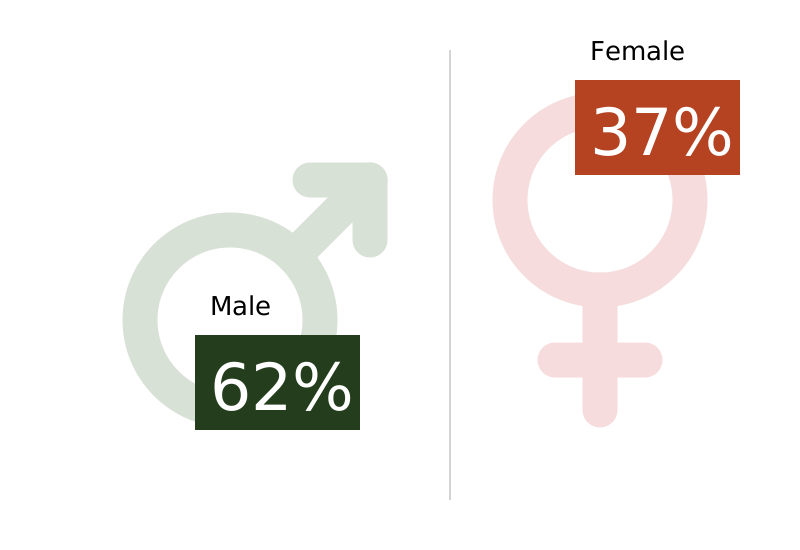
Who are these workers?

What is the age of the surveyed respondents?

A greater proportion of these workers lie in the older age group, suggesting a reliance on informal work for continued income due to the financial responsibilities they have to manage.

Migration Trends and Patterns

Why are people migrating?

The majority of respondents reported migrating due to limited employment opportunities at their source locations (59%). However, for some,  disasters at the source influenced their decision to migrate, highlighting how extreme climatic conditions shape migration choices.

Why are migrants choosing certain destination locations?

For nearly half of the respondents, destination locations are chosen based on better job opportunities available at urban hubs. A significant proportion also mentioned educational opportunities (23%) and higher wages (21%) as key factors, suggesting the city’s role as an important economic centre with improved access to services.

Who are they migrating with?

Most workers choose to migrate with one or more family members, like their spouse and/or their children, suggesting the decision to be a family based strategic choice for improving conditions for the entire household. Additionally, a few workers mentioned migrating alone (17%).

What duration are migrants moving for?

For a significant percentage of workers (48%), migration is a permanent move, while one-fifth of the sampled workers had stayed in Quezon city for at least a year. Long-term and permanent migration may provide better employment opportunities and facilities at the destination location compared to their source locations. Moreover, this could also be attributed to the archipelagic geography of the country, as it limits the mobility of workers, making the move permanent.

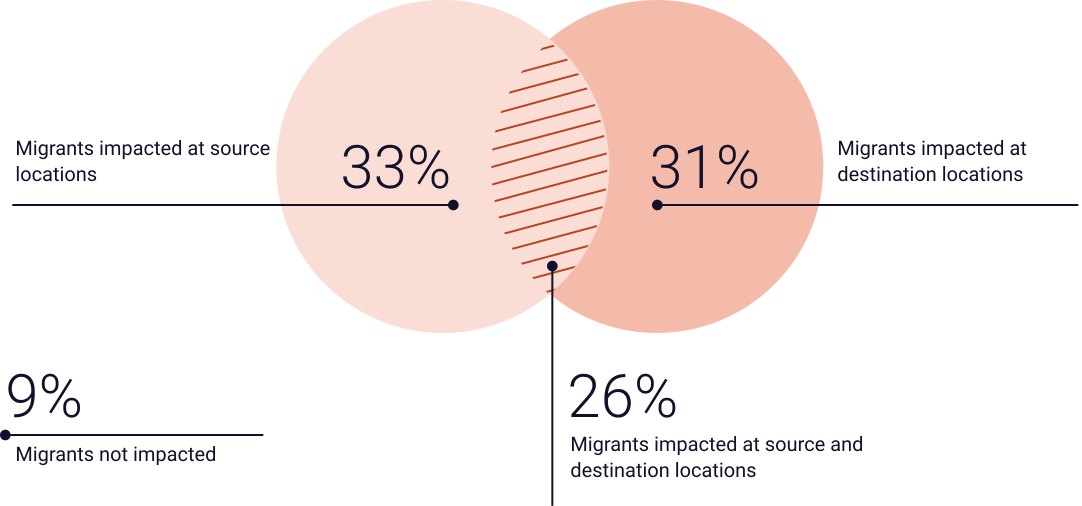
How many migrants are negatively impacted by extreme weather events?

A significant proportion of workers reported being affected by extreme weather events at both source and destination locations. More than half of the workers reported experiencing such impacts at destination locations, highlighting how climatic conditions in destination cities shape workers’ livelihoods and household conditions. This further compounds the vulnerabilities of the migrant workers to these locations in search of better employment opportunities, only to face additional climate-related risks.

Extreme weather events workers face in cities

Almost 84% of workers were impacted by increasing heat. With a significant proportion mentioning increasing temperatures negatively impacting these workers, some have further noted that the intensity of heat has risen noticeably over time, particularly for those working outdoors in such extreme conditions with growing concerns around climate change and its impacts on daily livelihoods.

From what I've experienced, the heat now is different. It’s extreme, especially when you’re outside. You can really feel it. The heat now compared to different years is on a different level. Climate change is really serious.

- Mary, factory worker, Quezon city

Impacts on Work

Although one-third of the workers mentioned not being impacted at work, a significant proportion expressed deep distress about their income and working conditions due to extreme weather events.

Wage Related Problems

Majority of the respondents mentioned income related issues which include wage loss and wage cuts due to extreme weather events. For many, heat posed as a significant factor in reducing their wages forcing them to compensate for it by intensifying work during cooler periods.

arrow

Wage Related Problems

“We earn less and have to make up for the lost hours at work when it’s not hot anymore. That’s when you rush the work.”

- Liza, factory worker, Quezon city

arrow

Productivity Losses And Difficulty In Working

For many workers, extreme temperatures limit productivity and hinder their ability to work, as constant efforts to cope with physical discomfort disrupt workflow. For some, extreme temperatures lead to heat stress and physical exhaustion make it difficult to continue working.

arrow

Productivity Losses And Difficulty In Working

“I work less hours as I need to rest because of the heat. I don't seem to have the desire to work. Because if we move a little, it feels like we'll die from the heat.”

- Cristine, street vendor, Quezon city

arrow

Adverse Working Conditions

Workers highlighted poor workplace conditions and a lack of agency, which compels them to continue working under extreme heat.

arrow

Adverse Conditions

“Especially in the factory, it's very hot there. In our factory, there are no windows, the only window is by the door. There is the electric fan, it spins, but it’s still so hot.”

- Manny, factory worker, Quezon city

arrow

Impacts on households

Health problems

Due to extreme heat conditions, many of the workers mentioned getting affected with health problems such as headaches, rashes, cough that disrupt their physical well being. When several family members fall ill, health related costs also rise for workers, increasing their financial burden.

arrow

Health problems

“I have a child with a weak heart. If it is too hot, my child turns blue. There are 3 medicines I need to give when she gets rashes from sweating under the heat. It costs 300 pesos for 20 tablets. I go out of the house with her sometimes when it’s too hot, so she feels better.”

- Arturo, factory worker, Quezon city

arrow

Sleep and rest deprivation

Workers mentioned how extreme heat extends beyond the workplace into the home, affecting workers’ ability to rest and recover. With frequent power cuts and cooling options, rest time gets disrupted and reduces the quality of sleep, leaving workers physically fatigued. This limited rest further carries over into the next day, further affecting their productivity, health, and ability to cope with heat during working hours.

arrow

Sleep and rest deprivation

“A few days ago, we had no electricity. We slept with no electric fans.”

- Rowena, factory worker, Quezon city

arrow

Layered challenges affecting family dynamics

Extreme temperatures also disrupt household dynamics, particularly as many workers live in overcrowded conditions. Discomfort and limited coping mechanisms often lead to conflicts among family members over scarce cooling resources. Furthermore, inadequate rest adversely affects the overall well-being of the household.

arrow

Layered challenges affecting family dynamics

“When it’s hot at night, they keep spinning and pushing their mother. They don’t want anyone beside them and want to keep the electric fan to themselves. Sometimes, the fan gets blocked, so they get angry.”

- Dennis, factory worker, Quezon city

arrow

Assistance received during and post extreme weather events

Complete lack of assistance

In such extreme conditions, a significant percentage of workers reported receiving no assistance, reflecting how they are left to navigate these distressed times on their own with little or no support. This further highlights the lack of safety nets available for these workers during such hard times.

arrow

Complete lack of assistance

“No support is given when it’s extremely hot.”

- Joseph, street vendor, Quezon city

arrow

Limited support to workers

While there is no assistance being provided for some workers, others mentioned getting some form of support from the government and very few from NGOs to cope with increasing temperatures. However such support is limited and temporary, further inadequately addressing the broader challenges these workers face.

arrow

Limited support to workers

"NGOs provide support in the summer and give food packets"

- Mariyam, factory worker, Quezon city

arrow

Lack of employer support

During our conversation with workers, the majority highlighted not receiving any assistance from their employers, while a few mentioned receiving some support in the form of essential items, which was not consistent but rather occasional, reflecting the temporary nature of such assistance provided to workers affected by extreme weather events.

arrow

Lack of employer support

“They (employers) give us food sometimes.”

- Alex, factory worker, Quezon city

arrow

Coping mechanisms adopted during extreme weather events

Limited coping mechanisms

Most of the respondents mentioned greater support from people in their closed circle during such extreme weather events, often relying on them for immediate financial or in-kind assistance. A few also reported dipping into their savings which exacerbate workers’ financial vulnerability or having no coping mechanisms at all, instead enduring the brunt of such climatic conditions.

arrow

Limited coping mechanisms

“When I am in need I borrow a small amount, from the people I know, from my neighbours.”

- Paolo, factory worker, Quezon city

arrow

Short-term remedies

In the absence of institutional assistance or lack of comprehensive coping mechanisms during such extreme conditions, workers mentioned how they adopt instant cooling measures to give them some respite to continue functioning with their daily routine. Some of the quick fixes include consuming iced drinks, increasing water intake and AC usage. These, however, add to the monthly expenses for workers.

arrow

Short-term remedies

“When it’s hot, I keep wiping my face. When I don’t have a handkerchief, I walk and get fresh air.”

- Angeline, street vendor, Quezon city

arrow

Stories from the ground

Erwin -

Erwin has lived in Quezon City for over 30 years, employed in multiple jobs due to the volatility of the informal sector. Most recently, he worked in a plastic factory; he lost that job when the factory shut down as a result of the plastic ban in Quezon City. Currently, he looks for odd jobs to support his family.

During Erwin's time at the factory, he experienced intense heat on hot days due to poor ventilation and a lack of ceiling fans. He recalls, “It was extremely hot because it was full of machines.” He mentions that even electric fans were prohibited at the factory, leading to them not having any respite from the heat within the factory building, “Ah, electric fans weren’t allowed. This was because, in production, during cutting, the fan might blow away the cut outs.” At home, he can see the impacts of extreme heat on his children, “ my child gets prickly heat rashes. We bathe them.”

Erwin mentioned there was minimal support to help workers cope with heat in the factory. His employers had installed a water fountain with cold water which helped, but the lack of fans was distressing, as was the prohibition on portable fans. With the loss of Erwin’s job, he faces new livelihood challenges and the possibility of different heat challenges in other occupations.

Gloria -

Gloria, 50 years old, came to Quezon City over 20 years ago for better economic opportunities. She started work as a domestic worker, and eventually found work in a garment factory where she still works, though the quantity of work has reduced over time.

In the past 20 years, she thinks the climate in Quezon City has significantly changed and become extremely unpredictable; “It seems hotter now. I don’t know, it’s just worse than before. As for the rain, you can’t tell when it’s coming. But when it looks like rain, we go, ‘Okay, time to pack things up!”

With the increasing heat in Quezon City, Gloria talks about the unbearable conditions that heat is creating at her workplace. She says, “It affects us. With just a little movement, you’re drenched in sweat. Like me, when I sweat, I get itchy. I can’t even work properly because of the heat.” Even though the factory has fans, they are often switched off by the management during break times leading to reduced rest quality. They receive arbitrary reasons for this action by the management; “They said the fans might overheat. So we just follow”. At home, even though her family is at risk of different heat -related health issues, she claims there isn't much to do to help them or herself.

Gloria and her fellow workers understand the injustice that they face at the factory during extreme heat. She exclaims, “You really can’t take it. When you nap, you’re sweating buckets. Meanwhile, they have air conditioning in the office?” She has often tried to reason with her supervisor saying “Sir, the heat is unbearable. We might get dehydrated.” However, her pleas have so far been unsuccessful.

Workers such as Gloria need to be protected and supported by employers during such times rather than needing to fight for basic necessities.

Impacted by extreme weather events - this data represents workers who are impacted by various kinds of weather events.

Impacted by Heat and Other weather events - this data represents workers impacted by heat alone, as well as those impacted by heat in combination with other extreme weather events.