




Akram -
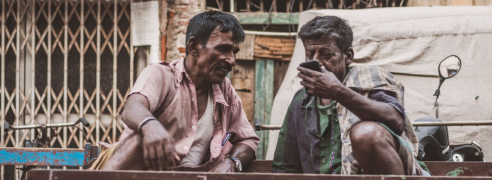
Akram, 28 years old, is the primary earner within his family. A migrant worker, employed in a garment factory in Dhaka, Bangladesh, mentions that during the summer months, heat becomes unbearable. The infrastructure of the factory only makes it worse.
At the factory, Akram says, “In the cutting section where I work, the situation is even worse. We work with fabric, and the area is closed from all sides, making it incredibly hot. The fabric we handle is hot and the sewing machines release heat from their copper motors. Additionally, imagine 200 people working together in a closed space, that body heat adds up. The heat is unbearable.”
The factory sees constant power cuts during the summer, usually due to load shedding. During these periods, with no fans or cooling mechanisms, it becomes impossible for Akram and his fellow workers to stay on the factory floor. They’re forced to step outside near the fire hydrant or stand by the stairwell corner for some relief. In spite of these challenges, he mentions, “The company does nothing. Even if there's no power for 1.5 to 3 hours, they don’t give us leave. We just sit and wait.”
Akram noted health issues are rampant during the summer months especially within the workplace. He spoke about his fellow workers vomiting, experiencing high blood pressure, or feeling dizzy due to the heat.
He recalled, “I remember a tragic incident from a year or two ago. A boy, around my age came to work, climbed the stairs, drank water, and suddenly collapsed from heatstroke. The doctor wasn’t called immediately. When they finally took him to Al-Baraka Hospital, they couldn’t admit him, and then referred him to Dhaka Medical. He died before reaching there. Everyone cried—around 200 workers from our sample department. I believe he died because of the delay and poor medical judgment.”
With no protection mechanisms or support from employers to reduce distress caused to workers during the summer months, the heat will only become further unbearable for workers like Akram.
Razia -
Razia, a 25-year-old domestic worker, moved to Dhaka about 9 years ago, eventually found a home in the city, married, and settled down. During the initial years of her marriage, she took care of the household; however, in 2018, decided to seek employment to cope with the growing financial challenges within the family due to her husband’s frequent illnesses.
Razia mentions that heat during the summer months has gotten worse over the past few years. Her work, which requires constant movement, and life at home in a tin-roofed household, make it extremely challenging during the summer. She mentions,
“when I mop the floor, I have to bend down, and it becomes very hot. I have to turn off the fan while sweeping, which makes it even worse. After cleaning one house, when I go outside, the sun feels scorching. Then I head to the next house and have to climb stairs in the heat. It’s exhausting.”
Razia works part-time in multiple houses, completing tasks such as cooking, cleaning, etc. Additional restrictions placed on workers like Razia make their work even more unbearable. She talked about domestic staff in residential areas not being allowed to use lifts which meant that after entering the building from the scorching sun, she had to climb 5-6 flights of stairs to reach her employer's house. The exhaustion and reduced productivity due to this, significantly impact her ability to work.
To cope with these increasing temperatures, Razia and her family use electric fans to keep themselves cool at home. However, this often leads to extremely high electricity bills and additional financial costs for a family already struggling financially. Razia feels that some support from the government during the period would take her family a long way to cope with these yearly impacts.
“I feel that if they provide some assistance, we could live better, eat better, and generally do better, like if there was rice, lentils, etc., that would be good.”

