





Jae -
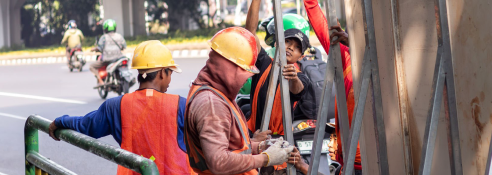
Jae, a 21-year-old, migrated from Bandung to Bekasi in the Jakarta greater area a few monthsback to try his luck at better opportunities in the big city.
The combination of the Bandung area being located at a higher altitude (around 700 -1200 metres above sea level) and Jae working in hotels airconditioned to 18-19°C, made the heat more bearable. In Bekasi, he is employed in factories with poor ventilation and no cooling, making the heat intolerable. While Bandung and Bekasi are both major urban centres in Indonesia, they both exhibit increasing urban heat island (UHI) effects and intensity; however, Bekasi, known as a satellite city for Jakarta, has experienced a more significant increase in land-surface temperature than Bandung, due to industrialisation and urban expansion.
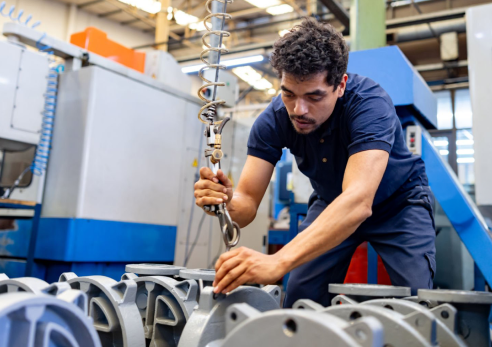
Jae mentions that at his factory in Bekasi, the production room is big, but has crowded production halls filled with machines and people which increase the heat. On hot days, the work leaves him weak and dehydrated. He recalls, “There was a time when I had to work in a really cramped room. It was so small you could only fit one person inside. I was fixing a component in the machine and almost fainted because it was so cramped and lacked oxygen, it was hot in that room.” There is barely any support from factory management or owners.
Like most factory workers, Jae lives in the informal settlement areas of Bekasi, where housing is poor and ventilation often non-existent. To cope with high temperatures, he uses a fan or increases his drinking water intake. However, these lead to additional electricity and water expenses. Drinking water, a basic need, must typically be purchased in bottles, as water direct from a tap is not potable.
Jae remarks that even though the weather was better in other areas he has lived in the past, it is almost the same everywhere now: hot and humid. The intense heat, in Jakarta and other cities where economic opportunities exist, continue to create hardship for migrants.
Ayu -
38-year-old Ayu is the sole breadwinner for her husband and two children. Originally from Central Java, she migrated 14 years ago to join her husband in Jakarta. Over the years, Ayu’s husband has struggled to find a stable job, and as he grows older, his chances of securing employment have narrowed. With financial responsibilities mounting, Ayu has to work multiple jobs under the set minimum wage to support her family.
Ayu primarily works as a street food vendor, spending hours under the sun cooking in front of an open flame. To reduce expenses, and in some instances the unavailability of public transport, she ends up walking to her workplace. The nature of her work drains her energy so much that her health and productivity is affected. Moreover, her relentless schedule leaves her with very little time to rest. On average, she works for about 18 hours a day, with work starting as early as 3 in the morning.
She explains, “I come home from work late in the evening and get to cleaning. Then I cook for my husband and children. After finishing up all the work, I go to bed at 10 PM. I have to wake up at 1 AM to wash up and get ready for work. I have to manage my time very precisely. Working and taking care of the kids is not easy.”
Ayu has noticed that in recent years, the heat in Jakarta has gone from bad to worse. However, despite headaches, dizziness and other heat-related issues, she continues working, as missing work leads to pay cuts. The informal nature of her work guarantees her no leaves or benefits.
Due to the poor state of their finances, Ayu and her husband often have to borrow money for basic needs like school fees and electricity bills. When asked about other coping mechanisms, she replies, “As long as my health is not impacted, I have to deal with the increasing heat on my own. All I can do is to drink water or iced drinks to tolerate it. I am used to it now.”
Ayu did not mention any form of aid from the government or external agents in dealing with heat impacts. The only benefit she receives from the government is for her children’s education. With worsening heat in Jakarta and gaps in safety nets, Ayu and her family remain extremely vulnerable to heat-related shocks while their financial challenges continue to build.

